Posts

A remarkable class that taught me as much as I taught it

Image
This year, I offered a class for the first time to the school's year 10 students: Big Ideas in Computer Technology. The course was inspired by a lecture I had watched on Youtube in which Dr Daniel Garcia of UC Berkeley presents the idea of CS Principles, an advanced placement course being offered at some US high schools in a bid to foster greater interest in Computer Science among school-aged students.


Building an APP with students: The joys and lessons

Image
On January 23rd, 2013, the Avila College APP Group's APP, Lock Spin, went live on the App Store. A few days earlier, it had been available from Google Play. In this post, I reflect on some of the lessons I drew from this experience. The idea behind Lock Spin was to help incoming year 7s learn how to use their combination locks. It also turned a familiar item at school into something we could have fun with. Before I go any further, these are the links for downloading the APP: App Store:      https://itunes.apple.com/us/app/lock-spin/id594413665?ls=1&mt=8 Google Play:    http://goo.gl/2C9ZF

Five benefits of learning with a friend

Image
Learning with a friend Throughout this year, I have been undertaking small learning projects with my friend and colleague, Steven Francis. I find our learning sessions invigorating and a large part of what I like about my workplace. In this post, I share some advantages of learning with a friend. (c) Can Stock Photo Steven and I have established a weekly ritual that has turned Friday afternoon from a draining time of the week into an enjoyable one: Every Friday after school, we pack up our our weekend corrections and head to a close-by eatery. We indulge in vegetarian pastries, soft drinks and some potato chips as we have a casual and, at times, cathartic chat (yes, men have those too!). After about 30 minutes, we head back to school and work on a learning project for about two hours. The common thread of our projects this year has been computer programming.

Three students at a teachers' conference

Image
For the second year running, I had the privilege of taking three students to the VITTA annual conference to present a workshop on developing APPs using Corona SDK. This year, I took Ally from year 8, Yara from year 9 and Ping from year 11 (not their real names!). All three are members of the Avila College APP Group.  Preparation In  my reflection on last year's experience , I wrote that 5 weeks would be needed to prepare the students. Unfortunately, this year's conference was at the start of week 4 of the school term. Starting at the end of the last semester would have been impractical as it would have clashed with exams and report-writing. Still, we met twice a week and the girls ran one of the APP Group meetings as a rehearsal.

Jessica's solution to a loopy problem

Image
A well known algorithm, taught in Number Theory classes at tertiary level, is Euclid’s algorithm for finding the Greatest Common Divisor (GCD) of two numbers. In Australia, we tend to refer to the GCD as the Highest Common Factor. In this post, I describe the algorithm and present a year 8 student’s program that implements it. The Algorithm To illustrate what the GCD of two numbers is, let’s consider a 21 x 15 rectangle.

The first APP Group meeting of 2012

Image
Today we had the first meeting for this year's APP Group. According to returned permission forms, the group should have 37 student members. The attendance today was 34. I was also joined by two of my colleagues, Steven and Colleen. The latter has been reading Seymour Papert lately and has learnt that Scratch was created by one of his students, Mitchell Resnick.

Why girls should learn computer programming

Image
Lately, I have made a case for programming in the curriculum and my colleague, Sarah Macdonald, wrote about using Scratch to help students "understand their own problems, make mistakes and explore alternatives" . This post is a manifesto for teaching girls in particular how to program. In it, I argue that this is an essential skill for girls to help make the future rather than see innovations as black magic which they may only consume. Samantha (Year 9) : "I have a friend who wrote a program that generates bibliographies for his school work." Me: "That's great. How would you like to learn to write your own programs?" Samantha: "No, Mr. Baroudi. That's what boys' schools are for!" Picture from: canstockphoto.com

Beyond teaching programming: Scratch as a constructivist learning environment

Image
This is a guest post is the second in a series (you can read the first post here ) and is written by my colleague Sarah Macdonald. In it, Sarah tells about teaching Scratch for the first time to her year 7 girls. Flashback, 2010 End of year curriculum planning meeting.  Students departed.  Reports written.  Teachers fatigued... and my Head of IT has just announced a major change in the IT curriculum for the following year.  We will be teaching Scratch.  What do I know about Scratch?  I know it’s about programming and primary schools are using it to create endless cartoons about a yellow cat.  Why Scratch?  I realise I have a lot to learn.

Every child should learn computer programming

Image
In a previous post , I have listed a few reasons for teaching programming in school. In this post, I intend to argue that computer programming is an essential skill in the curriculum. I was prompted to write it when I read the following comments made by Steve Jobs: "In my perspective ... science and computer science is a liberal art, it's something everyone should know how to use, at least, and harness in their life. It's not something that should be relegated to 5 percent of the population over in the corner. It's something that everybody should be exposed to and everyone should have mastery of to some extent, and that's how we viewed computation and these computation devices." ( http://www.npr.org/2011/10/06/141115121/steve-jobs-computer-science-is-a-liberal-art?sc=tw&cc=share )

Building an APP with Students: What I have learned this year

Image
Last year, I decided to start an APP development club at my school. I spent some time in the summer break investigating alternative development environments . In the end, I settled on Corona SDK . Unfortunately, I only had a few days left to learn it before the start of the school year. I took some time in Term 1 to complete some tutorials and make connections with Corona developers. Thanks to Twitter, I was able to make friends who have taught me a lot about the technology. The group began in Term 2 and we are now most of the way through an APP we intend to submit to the App Store. A friend has prodded me to get back to writing about the experience so far.

Book Review: Totto-chan - A book for every educator

Image
Totto-chan: The Little Girl at the Window Author: Tetsuko Kuroyanagi, Translator: Dorothy Britton. Publisher: Kodansha International, 1996. ISBN: 4-7700-2067-8 This book was given me as a gift by my sister-in-law, an educator and avid reader. It is the autobiography of a famous actress and UNICEF Goodwill Ambassador. The book concentrates on a short period of time when the author attended Tomoe primary school in Tokyo. In fact, the book is more a description of the school founder's practice than it is a life story. Expelled from first grade! The book starts by telling of Totto-chan's expelling from her previous school, when she was only in grade one. You see, "the little girl at the window" would wait all morning for street bands to walk by the school and call them over to play their music. This was seen as highly disruptive behaviour and, exasperated, her teacher decided the girl did not become at the school. Eventually, her mother found a school th...

Twitter + ReadItLater = Connected educators

Image
I am writing this blog post for my colleagues, and other educators, who are not yet on Twitter . In it, I intend to provide a guide to using Twitter and to managing the reading load that the Twitter-habit will generate. Understandably, teachers don't want to add another distraction to their busy days. They often hear that Twitter is a forum for people who think the world needs to know every opinion they have and every place they visit. These were my views of Twitter until I took the plunge and signed up. I now have an active exchange with educators from around the world and, thanks to ReadItLater, I have found a way to read some of their output without adding to my workload . This exchange has enriched me in many ways: it supplies me with lesson ideas, gives me a forum to put my ideas out for scrutiny and keeps me up to date with educational trends. Through Twitter, I have met someone who has visited my classroom and taught my students valuable skills.

Am I the only one upset with Apple?

Image
Like many people, I have switched to using a Mac and I love it. I also have an iPad which I enjoy very much. As of this year, my school has begun the process of putting a laptop in the hands of every student. Our machine of choice was the white MacBook. In this post, I argue that Apple has disadvantaged schools when it terminated this model. A bit of context: I work at a school with a forward-looking IT manager. He convinced us to become a Mac school about five years ago. That was when I bought my first MacBook. It was not perfect and I even had to return it for repairs after the first year. Still, it was the most predictable computer I had ever owned. Slowly but surely, the staff and students grew to love the MacBooks and iMacs around the school.

I searched eight years for this answer

Image
When I first began teaching secondary school Mathematics, roughly eight years ago, I wondered where word problems fit into the structure of a topic: Do they come at the beginning to provide a context or at the end, where they provide an application for the acquired skills. In case you don't want to read on, I am now certain that they should come at the beginning. Still, please keep reading, I want to discuss my reasons and give one example of what I mean. Source: www.freedigitalphotos.net

Students presenting at a teachers' conference

On Monday, August 29th, I was joined by three of my students in presenting a workshop at the Victorian Information Technology Teachers Association conference: Leading and Learning from the Edge. We ran a workshop entitled: "Building mobile Apps for iOS and Android Devices using Corona SDK." I was very proud of the three girls (I work at a girls' school) and I wanted to write this blogpost in their honour. Context At our school, an Apps programming club has been running for a term and a half. When I received the "call for papers" from VITTA, I thought it would be a good idea to involve some students as this would motivate them and give them a special experience. As we came closer to the conference, I realised that we had covered less ground in the App Club than I had anticipated. The student presenters and I were not as confident anymore.

VITTA 2011: What I learned on day one - First session

Today was the first day of the VITTA (Victorian IT Teachers' Association) conference. It is the only day I am attending and, as always, I have learned a lot! Here is my summary of the first session of today: Keynote 1: Roger Larsen, Pearson Platforms Roger's speech was very engaging. In it, he emphasised 21st Century skills. In particular, he noted critical thinking and entrepreneurship as key among those skills. Roger emphasised that digital content must not be a mere digitisation of paper. He wanted digital content to be changeable and interactive.

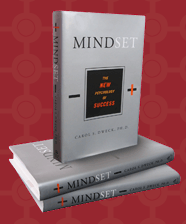
Book review: Mindset by Carol Dweck

Image
I have recently listened to the audio recording of Carol Dweck's book: Mindset (Ballantine Books, 2007).  Dweck is a professor of Psychology at Stanford University (formerly at Columbia). She had had a profound effect on me as a teacher when I was looking at research into feedback. Dweck's work showed that praising children for their traits, "you're a good boy" or "you're so smart" made them less likely to attempt subsequent tasks which they perceived as challenging. On the other hand, praising children for their effort made them want to persist with difficult tasks and look for alternative strategies to complete them:

Last App Club meeting for the term

Today, we had our last App Club meeting for the term. Some of the students now have exams to prepare for and I have reports to write. I have scheduled 8 meetings for the following term. So, here is what we did today: Peach Pellen, Corona celebrity and owner of Techority.com , appeared via Skype. She told the girls about the early frustrations they could expect and told them it would be worth it in the long run. She encouraged them to have Apps on the App Store by the time they finish school. Should they stick with it, she added, they'd be able to charge a good hourly rate to companies who needed Apps built for them.

Why teach programming using Corona SDK?

At the moment, I am not aware of other schools teaching App Development in Corona SDK. I am sure that such schools are out there and I would love to get to know the teachers. Being a beginner in this field, I am sure I can learn a lot from those with more experience. Here is why I believe Corona SDK is a good platform for teaching programming: App Development is more likely to engage the kids' imagination than, say, database programming; Corona supports both iOS and Android devices; Lua, the language used by Corona, is a flexible, minimalistic language. Eg: variables don't need to be given a type and semicolons are not required at the end of each statement; The SDK includes objects that give access to the mobile device's screen with great ease; It is a new platform that is gaining a lot of momentum among developers; The Apple University Consortium (AUC) has started offering courses on Corona SDK. A great endorsement; Every evaluation I have read of the performanc...

App Development Club: Starting on our first game

Today, there were 31 students in the after-school App Group. One student had apologised for a medical reason and another one was absent from school. We started on a simple game that would help consolidate what we have learnt so far note my use of the first person plural, as I am sorting things out myself. This is what was achieved today: Words falling across the screen (using transition.to) An event handler for the "touch" event. When the user touches the words, they disappear. This may not seem like much, but this simple App made them understand the concept of event handling. They also had to do some debugging, which was nice. For the first time, they had to write their own code and then look over it to find - mostly spelling - mistakes. A few of them replaced the words with an image and one student had three different sentences coming in from different parts of the screen. We will make this App a little more involved next time. I hope to have and iOS developer license...